
Home » Curriculum » Math
Math
At the Yadkin Valley Community School, we encourage logical and critical thinking. As with other subjects, math does not live in isolation. It is applied throughout the day and across curricula. While studying Africa, students measure animal footprints. Chemistry and physical science go hand-in-hand with mathematical equations and formulas. Middle school practical life activities, such as creating a budget, give students an opportunity to sharpen their skills. And of course, in a Montessori school, math is connected to history through The Fifth Great Lesson.
In the Kindergarten and Lower Elementary classrooms, the math shelves hold many beautiful Montessori materials. The colored beads, geometric solids and fraction circles are designed to entice and inspire. Children develop of love of math as they use these materials to transition from the concrete to the abstract. Through one-on-one and small group lessons, students are introduced to numeration, operations, fractions and math puzzles.
The exploration of geometry is also a favorite! It is creative and gives kids a chance to play with shapes, create art, and search for geometry in nature. The fundamentals of geometry and plane geometry nomenclature are learned through concrete, manipulatable materials that lead children toward abstraction. This curriculum focuses on the study of lines and angles, the characteristics of shapes like triangles, polygons, quadrilaterals and circles and congruence, similarity and equivalence of shapes.
In the Upper Elementary classes, abstract work is a higher level of study, which comes naturally after the students have had numerous concrete examples and lessons. Students learn to leave many of the concrete materials for the four basic operations behind, but continues to use materials for fractions and decimals. The focus turns to concepts and procedures for work with math topics. These topics include advanced study in geometry, fractions, statistics, decimals and basic algebra.
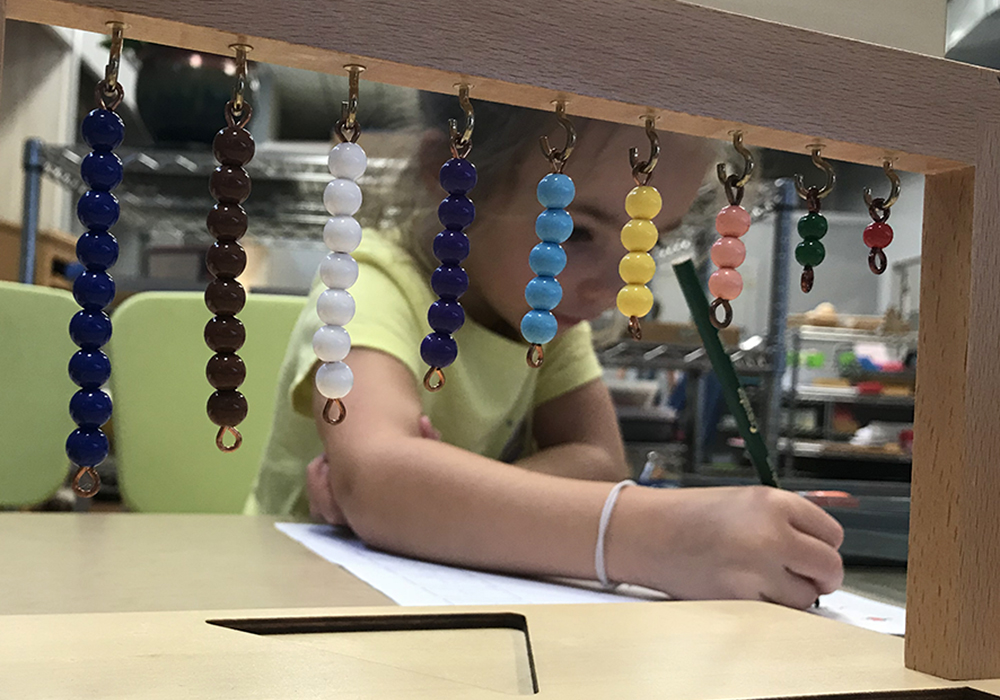
- The Bead Stair is a colorful work that helps a child master the numerical understanding of 1-9 and identifies each number with a color that will be used in more advanced Montessori works.
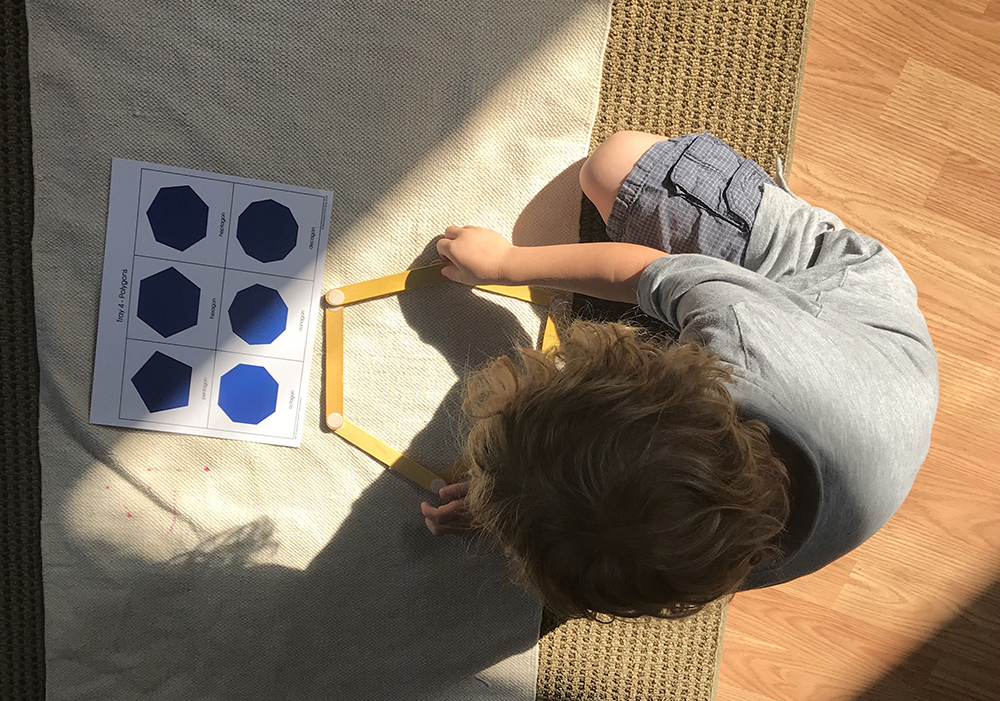
- In Montessori education, geometry is learned through exploration. Children handle real objects—shapes, solids, puzzles, and patterns—to discover mathematical relationships for themselves. This sensorial approach builds confidence, concentration, and a strong foundation for later abstract math. Geometry becomes a natural part of how children observe, understand, and appreciate the world.
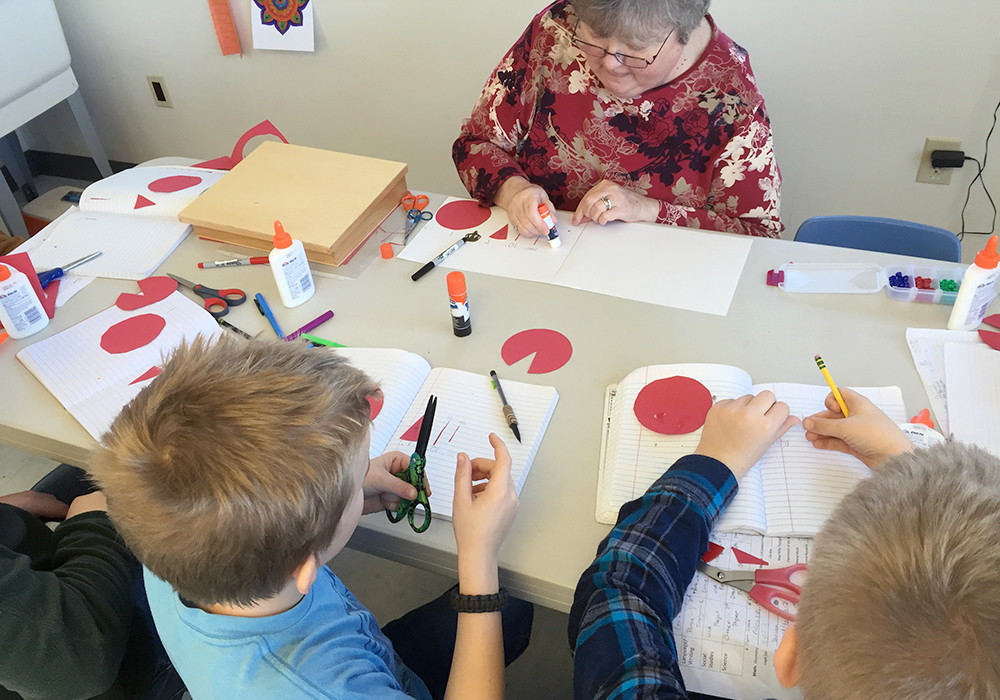
- Impressionistic lessons are a hallmark of Montessori mathematics. Through charts, experiments, and narrative demonstrations, children gain a concrete understanding of abstract concepts such as place value, operations, and the hierarchy of numbers. These lessons build a strong foundation for logical thinking and problem‑solving, allowing students to move confidently from concrete materials to symbolic math.
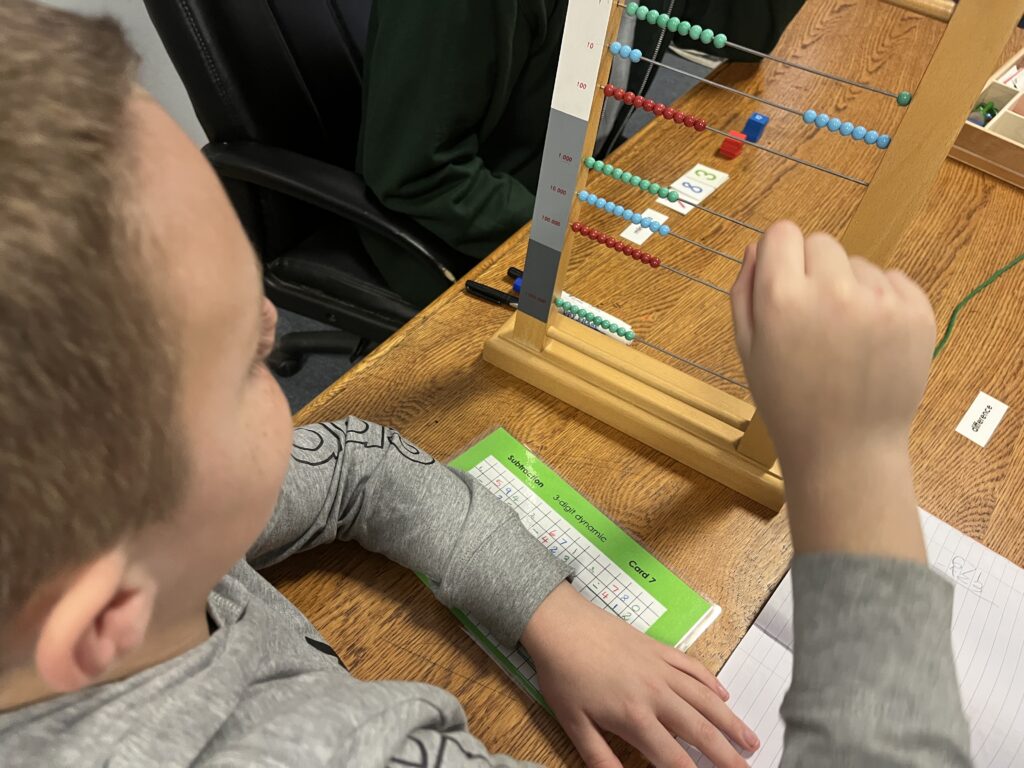
- Montessori math materials help children see and touch mathematical ideas. With beads, rods, and hands‑on tools, students build a solid foundation in quantity, place value, and operations before moving to abstract problem‑solving. The result is confident, capable learners who understand math from the inside out.
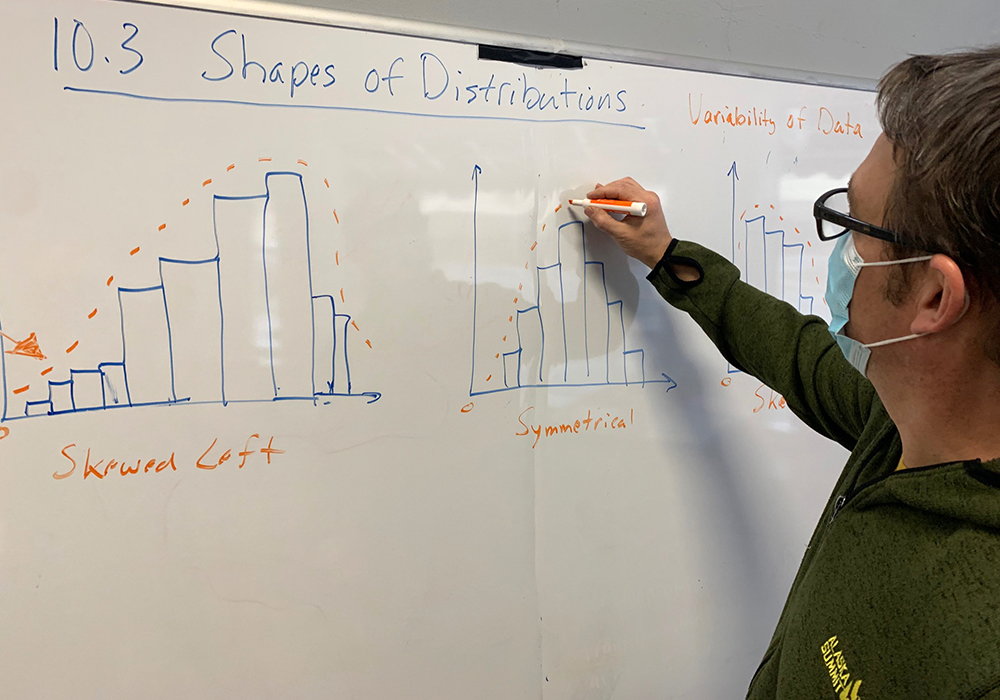
- Montessori middle school math blends concrete materials, visual models, and abstract reasoning to support deep conceptual understanding. Students engage in algebra, geometry, statistics, and applied mathematics through inquiry‑based lessons and meaningful projects.